
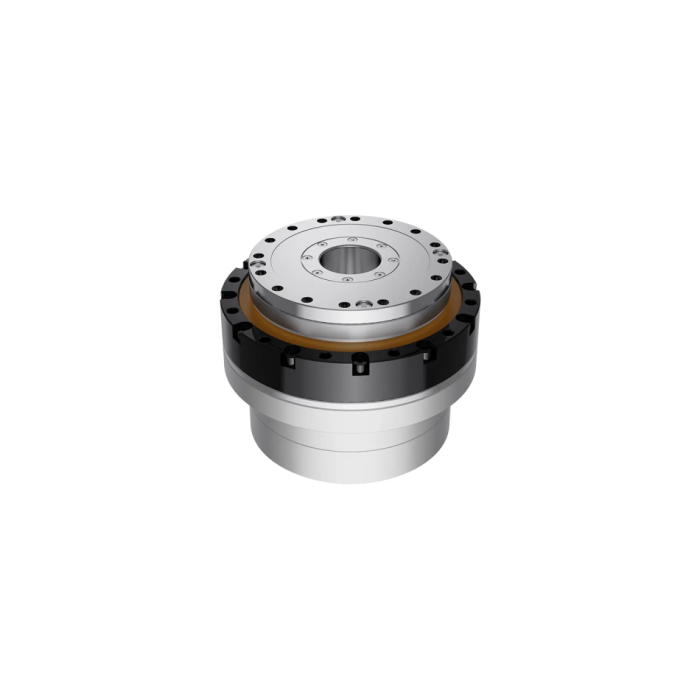
Ti5 Robotics 80-110 Lightweight Joint Module
Em estoque
- MARCA:
- TI5 ROBOTICS
- MODELO:
- 80-110
- ORIGIN:
- China
- Warranty:
- 12 MESES
- AVAILABILITY:
- SUBJECT TO AVAILABILITY
- SKU:
- Ti5-Robotics-Joint-Module-80-110
Ti5 Robotics 80-110 Lightweight Joint Module
Ti5 Robotics 80-110 Lightweight Joint Module is a modular, highly integrated rotary actuator designed for robotic arms, humanoid platforms, and other intelligent equipment that demands compact, efficient joint drives. The 80-110 family is published by the manufacturer as four versions — CRA-RI80-110-PRO-2-XXX, CRA-RI80-110-PRO-2-XXX-B, CRA-RI80-110-PRO-2-XXX-2E-EC, and CRA-RI80-110-PRO-2-XXX-B-2E-EC — offered with five gear ratios from 51:1 to 161:1. Depending on the selected ratio, documented peak torque ranges from 121 N·m to 217 N·m, with peak speeds from 22 RPM to 65 RPM, making the module adaptable to a wide span of joint positions within one mechanical footprint.
Background
The lightweight joint module concept
Integrated joint modules combine the motor, gearing, encoder, and drive electronics into a single sealed unit, replacing the traditional approach of assembling separate servo motors, reducers, and controllers. The manufacturer positions the 80-110 within its Lightweight Joint Module line, emphasizing three design pillars: modularity for flexible assembly and easy maintenance, a lightweight structure for better mobility and energy efficiency, and a highly integrated layout that optimizes space utilization and performance output. For robot builders, this architecture shortens development cycles because each joint arrives as a tested, self-contained actuator with a defined electrical and communication interface.
Design approach of the 80-110 family
Rather than a single fixed specification, the 80-110 is structured as a family. All documented versions share the same gear-ratio performance envelope, a 27 mm hollow shaft for internal cable routing, a 24–48 V supply range, and 750 W rated power. The versions differ in housing length, mass, rotor inertia, encoder resolution, and communication bus: the base versions use CAN with a 16-bit encoder, while the 2E-EC versions add a CAN/EtherCAT option with 16/18-bit encoder resolution. The manufacturer publishes complete parameter tables for three of the four versions; the fourth (CRA-RI80-110-PRO-2-XXX-B-2E-EC) is listed with a drawing reference but without published parameter values, so its figures are not reproduced here.
Technical Specifications
The following tables preserve the published configuration distinctions. Blank, malformed, or ambiguous source values are not confirmation of a capability; confirm the selected configuration during quotation.
CRA-RI80-110-PRO-2-XXX
| Gear Ratio | Peak Torque (N.m) | Max Allowable Torque At Average Load (N.m) | Rated Torque @ 2000RPM (N.m) | Peak Speed (RPM) | Rated Speed (With 1/2 Rated Torque) (RPM) | Gear Backlash (arcsec) |
| 51 | 121 | 68.5 | 48 | 65 | 54 | 20 |
| 81 | 169 | 107 | 78 | 43 | 35 | 20 |
| 101 | 194 | 133 | 84 | 36 | 27 | 10 |
| 121 | 207 | 133 | 84 | 30 | 23 | 10 |
| 161 | 217 | 133 | 84 | 22 | 17 | 10 |
| Rated Power(W) | Supply Voltage(V) | Max Continuous Current(A) | Rated Current(A) | Torque Constant (N.m/A) | Encoder Resolution (bit) | Communication Bus |
| 750 | 24-48 | 10.4 | 9 | 0.143 | 16 | CAN |
| Hollow Shaft(mm) | Length(mm) | Mass(kg) | Inertia(g * c㎡) |
| 27 | 85.5±0.5 | 2.06 | 1477.6 |
CRA-RI80-110-PRO-2-XXX-B
| Gear Ratio | Peak Torque (N.m) | Max Allowable Torque At Average Load (N.m) | Rated Torque @ 2000RPM (N.m) | Peak Speed (RPM) | Rated Speed (With 1/2 Rated Torque) (RPM) | Gear Backlash (arcsec) |
| 51 | 121 | 68.5 | 48 | 65 | 54 | 20 |
| 81 | 169 | 107 | 78 | 43 | 35 | 20 |
| 101 | 194 | 133 | 84 | 36 | 27 | 10 |
| 121 | 207 | 133 | 84 | 30 | 23 | 10 |
| 161 | 217 | 133 | 84 | 22 | 17 | 10 |
| Rated Power(W) | Supply Voltage(V) | Max Continuous Current(A) | Rated Current(A) | Torque Constant (N.m/A) | Encoder Resolution (bit) | Communication Bus |
| 750 | 24-48 | 10.4 | 9 | 0.143 | 16 | CAN |
| Hollow Shaft(mm) | Length(mm) | Mass(kg) | Inertia(g * c㎡) |
| 27 | 105.5±0.5 | 2.26 | 1761.1 |
CRA-RI80-110-PRO-2-XXX-2E-EC
| Gear Ratio | Peak Torque (N.m) | Max Allowable Torque At Average Load (N.m) | Rated Torque @ 2000RPM (N.m) | Peak Speed (RPM) | Rated Speed (With 1/2 Rated Torque) (RPM) | Gear Backlash (arcsec) |
| 51 | 121 | 68.5 | 48 | 65 | 54 | 20 |
| 81 | 169 | 107 | 78 | 43 | 35 | 20 |
| 101 | 194 | 133 | 84 | 36 | 27 | 10 |
| 121 | 207 | 133 | 84 | 30 | 23 | 10 |
| 161 | 217 | 133 | 84 | 22 | 17 | 10 |
| Rated Power(W) | Supply Voltage(V) | Max Continuous Current(A) | Rated Current(A) | Torque Constant (N.m/A) | Encoder Resolution (bit) | Communication Bus |
| 750 | 24-48 | 10.4 | 9 | 0.143 | 16/18 | CAN/EtherCAT |
| Hollow Shaft(mm) | Length(mm) | Mass(kg) | Inertia(g * c㎡) |
| 27 | 85.5±0.5 | 2.05 | 1532.07 |
How do the four versions of the 80-110 joint module differ?
All documented versions share the same torque and speed tables across the five gear ratios, so the practical selection questions concern packaging and communication. The -B version is longer (105.5 mm versus 85.5 mm) and heavier (2.26 kg versus roughly 2.05–2.06 kg), with correspondingly higher rotor inertia. The 2E-EC designation adds a CAN/EtherCAT bus option and a 16/18-bit encoder resolution choice, where the base versions are CAN-only with a 16-bit encoder. The fourth version combines the -B body with the 2E-EC communication option, but the manufacturer has not published its parameter table, so buyers should confirm its specifications directly before specifying it in a design.
Who is the Ti5 Robotics 80-110 Lightweight Joint Module for?
This module is aimed at engineering teams building complete robotic systems: humanoid robot developers who need compact, torque-dense joints; collaborative and industrial arm designers; research laboratories prototyping custom kinematics; and integrators retrofitting motion axes in intelligent equipment. The availability of CAN and, in the 2E-EC versions, EtherCAT communication makes it relevant to teams standardizing on either fieldbus. Because gear ratios from 51:1 to 161:1 trade speed against torque within one housing family, designers can match different joints of the same robot to a common mechanical platform.
What is the Ti5 Robotics 80-110 Lightweight Joint Module used for?
Documented application areas for the manufacturer's joint module line, and typical engineering uses, include:
- Joint actuation in humanoid robots, where integrated modules reduce assembly complexity in arms, legs, and torsos.
- Collaborative robot arm axes requiring low gear backlash (10–20 arcsec depending on ratio) for repeatable positioning.
- Industrial production equipment that needs compact rotary drives with hollow-shaft cable routing.
- Scientific research and education platforms, where modular actuators simplify custom kinematic prototypes.
- Medical and rehabilitation robotics development programs listed among the manufacturer's application scenarios.
- Commercial service robot mechanisms where mass, inertia, and energy efficiency drive actuator selection.
Pricing and Availability
Pricing for the 80-110 family depends on the version, gear ratio, encoder option, and order quantity, so it is quoted on request rather than listed as a fixed figure. When requesting a quotation, specify the exact version code, the required gear ratio, the communication bus, and your target quantities and delivery timeline. Project-based inquiries covering multiple joint sizes from the same family can typically be quoted together, which simplifies procurement for complete robot builds.
Frequently Asked Questions
What gear ratios are available for the 80-110 joint module?
Five ratios are published: 51:1, 81:1, 101:1, 121:1, and 161:1. Peak torque rises from 121 N·m at 51:1 to 217 N·m at 161:1, while peak speed falls from 65 RPM to 22 RPM.
Which communication buses does the module support?
The base CRA-RI80-110-PRO-2-XXX and -B versions use CAN. The 2E-EC version is published with CAN/EtherCAT and a 16/18-bit encoder resolution option.
What is the difference between the standard and -B versions?
The -B version is longer (105.5 mm versus 85.5 mm), heavier (2.26 kg versus 2.06 kg), and has higher inertia (1761.1 versus 1477.6 g·cm²). Published torque and speed figures are the same.
Does the module have a hollow shaft?
Yes. The documented versions have a 27 mm hollow shaft, which allows cables and lines to be routed through the actuator's center.
What supply voltage and power does the 80-110 require?
Documented versions operate from 24–48 V with 750 W rated power, 9 A rated current, 10.4 A maximum continuous current, and a torque constant of 0.143 N·m/A.
Are specifications published for all four versions?
No. Three versions have full parameter tables. The CRA-RI80-110-PRO-2-XXX-B-2E-EC is listed without parameter values, so its figures should be confirmed with the supplier before design-in.
Where can I buy the Ti5 Robotics 80-110 Lightweight Joint Module and what does it cost?
It is available to order through this product page. Because cost depends on version, gear ratio, encoder and bus options, and quantity, submit a quote request with your configuration to receive current pricing and lead-time information.
Summary
The Ti5 Robotics 80-110 Lightweight Joint Module is a family of four integrated joint actuators spanning five gear ratios, with documented peak torque up to 217 N·m, a 27 mm hollow shaft, 24–48 V operation, and CAN or CAN/EtherCAT communication depending on version. Three versions carry complete published specifications; one awaits confirmation from the manufacturer. For engineers comparing versions, requesting drawings, or configuring a quotation for a robot joint program, this page is the starting point.


