
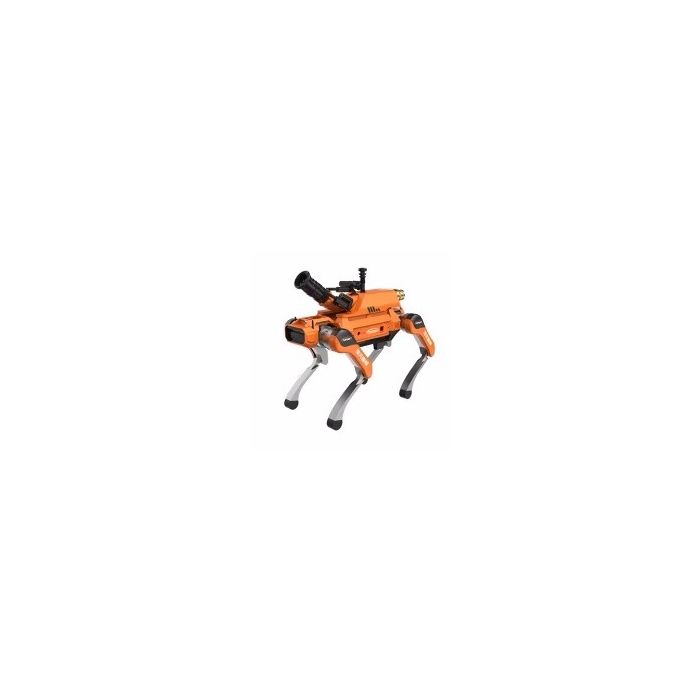
Topsky Assistive Firefighting Quadruped Robot Dog
Disponible
- MARCA:
- TOPSKY
- NÚMERO DE PIEZA #:
- Assistive firefighting quadruped robot dog
- ORIGIN:
- China
- Warranty:
- 12 MESES
- AVAILABILITY:
- SUBJECT TO AVAILABILITY
- SKU:
- Topsky-Firefighting-Quadruped-Robot-Dog
Topsky Assistive Firefighting Quadruped Robot Dog
Topsky Assistive Firefighting Quadruped Robot Dog
A quadruped configured for active firefighting rather than reconnaissance alone: Topsky lists modules for toxic and harmful gas detection, environmental detection, two-way intercom, a water cannon and ad hoc networking, on a platform rated IP67 and specified from −20 °C to 55 °C.
A modular platform, not a fixed appliance
The module list is the point. A legged platform that can carry a water cannon, gas detection, environmental sensing and a two-way intercom can be configured for the incident rather than bought for one. The intercom in particular is easy to overlook and valuable in practice: it lets a crew outside speak to a casualty the machine has reached, which a camera alone cannot do.
Ad hoc networking, and why communications fail first
Inside a tunnel, a basement or a steel-framed structure, radio and cellular coverage degrades exactly where the machine is most useful. An ad hoc mesh network lets units relay through each other rather than depending on fixed infrastructure, which is what keeps imagery and detection data coming back from deep inside a structure.
Published specification
| Specification | Published figure |
|---|---|
| Type | Quadruped firefighting and rescue robot, modular payload |
| Available modules | Toxic and harmful gas detection, environmental detection, two-way intercom, water cannon, ad hoc network |
| Operating temperature | −20 °C to 55 °C |
| Ingress protection | IP67 |
| Environments | Toxic, oxygen-deficient, heavy smoke and fire conditions |
| Water cannon output, endurance, payload and dimensions | Not published — we obtain these from the manufacturer on request |
Cannon flow and reach, and endurance under load, are the figures that determine what this machine can actually achieve on an incident. Topsky does not publish them for this model, so we obtain them from the manufacturer and confirm them in writing rather than estimating.
Specifying for a fire or rescue service
Three questions decide whether a machine like this earns its place, and they are worth settling before price is discussed.
- What is the duty? Reconnaissance, suppression, smoke clearance, casualty search and material transport are different jobs, and a platform optimised for one is compromised at another. Tell us the incident types you are equipping for.
- How does it get to the incident? Transport weight, crate size and whether the machine can be deployed by the crew already on the appliance matter more in practice than headline performance.
- What approvals does your jurisdiction require? Certification and type-approval for emergency-response use vary by country and by service. This is a question to answer before purchase, not after delivery, and we will confirm the position for your jurisdiction in writing.
Specifications and confirmation before order
The figures above are those Topsky publishes for this model. Emergency-response equipment is usually configured to the buying service’s requirement, so dimensions, endurance, detection modules, pump or cannon output and control range can all differ between builds. We obtain the full specification sheet from the manufacturer and put it in writing on your quotation before any order is placed — and if a figure you need is not published, we will ask for it rather than estimate.
Typical deployment
- Fire rescue at large petroleum and chemical plant
- Rescue and suppression in collapse-prone tunnels and subways
- Environments with flammable gas or liquid leaks and high explosion risk
- Incidents requiring close-range work that would put crews at high risk
- Unmanned reconnaissance and rescue in toxic, oxygen-deficient or smoke-filled conditions
About Topsky
Beijing Topsky Intelligent Equipment Group Co., Ltd. was established in 2003 and is headquartered in the Zhongguancun High-Tech Park in Beijing. It manufactures emergency-response and industrial-safety equipment — firefighting and rescue robots, gas-detection instrumentation and public-security equipment — supplied to municipal fire brigades, petrochemical sites, mines, utilities and law-enforcement agencies in China and internationally.
Supply, training and support
Topsky equipment is supplied to order rather than from stock, so lead times follow production. Lithium-powered machines are regulated dangerous goods in transit and diesel-powered machines carry their own shipping requirements, both of which affect routing and timing — tell us the destination country when you enquire and we will confirm delivered cost, a realistic lead time and the paperwork required. After delivery we help with training, commissioning and ongoing support, which on equipment that may sit unused between incidents matters as much as the initial handover: crews need to stay current on a machine they may only deploy a few times a year.
Where to buy
This model is listed above alongside the rest of the Topsky range. Contact our team for a formal quotation including the full specification sheet and delivery to your country. Fire services, civil defence organisations and industrial emergency response teams buying against a purchase order or tender should request a written quotation first.